
1. The Problem This Masterbatch Solves
When two layers of plastic film are pressed together — during winding, storage, or packaging — the smooth polymer surfaces naturally want to cling to each other. This phenomenon is called blocking. At the same time, film with excessive friction against metal rollers and guide surfaces causes jams, scuffing, and costly production line stoppages.
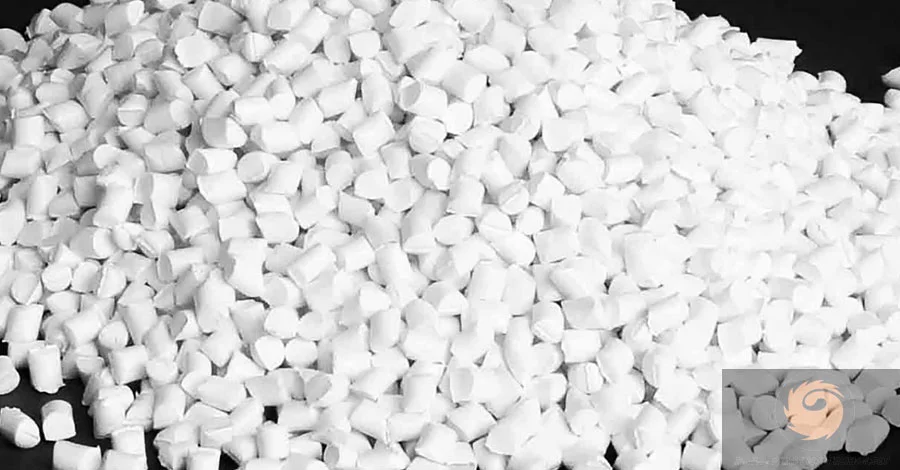
An anti-block slip additive masterbatch addresses both issues in a single, pre-dispersed concentrate. It is compounded into the film resin at a low let-down ratio (typically 1–5%) before extrusion. By the time the film is finished, it peels apart easily and runs smoothly through converting equipment.
2. Key Definitions: Anti-Block vs. Slip — and Why They're Combined
These two functions are related but distinct. According to the ISO 472 plastics vocabulary standard, a masterbatch is defined as a concentrated mixture of pigments or additives encapsulated in a carrier resin during a heat process, cooled and cut into granule form. The anti-block and slip actives are locked in a uniform matrix that processors can meter precisely and reproducibly.
| Function | What It Does | Mechanism |
|---|---|---|
| Anti-block | Reduces film-to-film adhesion | Inorganic particles create microscopic surface roughness |
| Slip | Reduces film-to-metal friction (COF) | Fatty acid amides migrate to surface, forming lubricating layer |
| Combined masterbatch | Solves both in one dosing step | Synergistic effect; single let-down ratio; consistent quality |
3. How Anti-Block Agents Work
Anti-block agents are fine inorganic (or occasionally organic) particles that create microscopic surface roughness on the film. Think of them as millions of tiny spacers — they physically prevent two film surfaces from achieving full contact, dramatically reducing the van der Waals adhesion forces responsible for blocking.
The mechanism is purely physical: particles protrude slightly from the film surface, so two layers touch only at discrete high points rather than across the full area. Less contact area means less adhesion and easy peel separation. For a deeper treatment of this topic, see the Elsevier ScienceDirect reference on polymer surface energy.
Particle size and loading level matter enormously. Particles too large create haze and reduce optical clarity; particles too small provide insufficient surface relief. Most commercial anti-block grades are engineered to a median particle size (d50) between 2 µm and 10 µm.
4. How Slip Agents Work
Slip agents work through a surface migration mechanism. They are typically fatty acid amides — most commonly erucamide or oleamide. These molecules are partially incompatible with the polymer matrix, so after processing they slowly migrate (bloom) to the film surface, forming a monomolecular lubricating layer.
This layer reduces the coefficient of friction (COF) between film-to-metal or film-to-film. The standard test method is ASTM D1894 (Static and Kinetic Coefficients of Friction of Plastic Film and Sheeting). Typical target COF values for packaging film range from 0.1 to 0.3.
Note: Slip agents that bloom too quickly can cause print adhesion problems or seal failure in heat-seal layers. Erucamide blooms more slowly than oleamide — an important factor when specifying the correct grade.
5. Masterbatch Format: Why Not Use Raw Additives?
Processors sometimes ask why they cannot simply dry-blend raw anti-block powder or slip agent into resin. There are several practical reasons masterbatch is the professional choice:
| Challenge with Raw Additives | How Masterbatch Solves It |
|---|---|
| Dusty powders create handling hazards and measurement errors | Pre-dispersed granules are clean, free-flowing, and easily metered by dosing unit |
| Poor dispersion leads to agglomerates, gels, and optical defects | Twin-screw compounding achieves homogeneous distribution before the customer opens the bag |
| Fatty acid amide powders have variable moisture and sticking tendency | Encapsulation in carrier resin stabilizes shelf life and prevents caking |
| Each additive requires a separate inventory and dosing line | Combined masterbatch uses a single dosing point |
At Rongfeng, every batch is compounded on co-rotating twin-screw extruders — the industry standard for additive dispersion quality. The Society of Plastics Engineers (SPE) recognizes twin-screw extrusion as the benchmark technology for additive compounding.
6. Common Raw Materials and Their Trade-offs
Anti-Block Actives
| Material | Type | Particle Size (d50) | Key Characteristics |
|---|---|---|---|
| Diatomaceous earth (DE) | Natural amorphous silica | 5–10 µm | Cost-effective; slightly higher haze |
| Synthetic amorphous silica | Synthetic inorganic | 2–6 µm | Controlled morphology; better clarity; higher cost |
| Talc | Natural phyllosilicate | 1–8 µm | Platelet shape; stiffens film; lower cost |
| PMMA microspheres | Organic polymer | 2–5 µm | Excellent clarity (RI match to PE/PP); premium pricing |
| Calcium carbonate | Natural inorganic | 2–5 µm | Very low cost; filler effect at higher loading |
Slip Actives
| Material | Migration Speed | Best For | Food Contact Status |
|---|---|---|---|
| Erucamide | Slow | Heat-seal films, print films | FDA 21 CFR 178.3860 compliant grades available |
| Oleamide | Fast | General packaging, bags | FDA compliant grades available |
| Stearamide | Very slow | Industrial film, sheeting | Generally compliant |
| Behenamide | Very slow | High-temperature applications | Check specific grade |
Food contact compliance is governed by FDA 21 CFR regulations in the US and by EU Regulation No. 10/2011 on plastic materials and articles intended to contact food. Rongfeng maintains SDS and compliance declarations for all food-contact grades.
7. Typical Applications by Industry
- Flexible packaging — BOPP, BOPET, LLDPE, HDPE blown film: bags, pouches, wraps
- Agricultural film — Mulch film, greenhouse film: durability combined with easy machine handling
- Industrial liners — Pallet stretch wrap, surface protection film
- Converting and printing — Film for high-speed printing lines requiring stable, predictable COF
- Medical and hygienic packaging — Specialized food-contact and clean-room certified grades
- Fiber and nonwovens — PP nonwoven for diapers and hygiene products
8. How to Select the Right Grade
At Rongfeng we guide customers through a structured selection process. Five parameters define which formulation is appropriate:
1. Host resin compatibility — The carrier resin must match or be fully compatible with the host polymer. A PE-carrier masterbatch should not be used in PP film without compatibility verification.
2. Required optical performance — High-clarity applications (window patches, OPP wraps) require synthetic silica or PMMA microspheres. For opaque films, diatomaceous earth or talc is cost-effective.
3. Target COF value — Specify required static and kinetic COF per ASTM D1894. High-speed packaging lines typically need COF below 0.2. Slower operations can tolerate 0.3–0.4.
4. Downstream processing constraints — Heat sealing, metallization, printing, and lamination can be compromised by excess slip bloom. Erucamide-based grades are preferred for these applications.
5. Regulatory requirements — Food contact, medical device, or toy applications require certified compliant actives and full raw material traceability documentation.
9. Processing Tips from the Production Floor
After years of customer trials and production troubleshooting, our technical team offers the following practical guidance:
| Issue | Likely Cause | Recommended Action |
|---|---|---|
| Film blocking after winding | Under-dosing anti-block; resin MFI too low | Increase loading in 0.5% steps; verify anti-block particle distribution |
| High haze / optical defects | Anti-block particle size too large or agglomerated | Switch to synthetic silica or PMMA grade; check dispersion quality |
| COF unstable over time | Erucamide slow bloom not complete on test day | Condition film 24–48 hrs at 23°C per ASTM D1894 before testing |
| Seal failure in heat-seal layer | Excess erucamide migrated to seal surface | Reduce slip level in sealant layer; use anti-block only in inner layer |
| Print adhesion failure | Slip bloom interfering with ink adhesion | Specify low-slip or erucamide-free grade for print layer |
10. Frequently Asked Questions
Can I use anti-block masterbatch in injection molding?
Anti-block masterbatch is formulated primarily for thin-film extrusion. In injection-molded parts, the surface topography mechanism is less relevant. External mold release agents or internal lubricant masterbatches are usually more appropriate for molding applications.
What is a typical let-down ratio?
Most anti-block slip masterbatches are designed for let-down ratios between 1% and 5% by weight, with the specific amount determined by the required performance level and the active loading in the masterbatch concentrate. Always start at the manufacturer's recommended starting point and trial upward as needed.
Is anti-block masterbatch recyclable?
Inorganic anti-block actives (silica, talc) are compatible with mechanical recycling streams for polyolefin films. Fatty acid amide slip agents are present at very low concentrations and do not impair recyclability. For certified recycled-content applications, consult the RecyClass recyclability guidelines for specific film constructions.
How does anti-block masterbatch differ from anti-fog masterbatch?
They solve different problems. Anti-block prevents film-to-film adhesion. Anti-fog masterbatch contains surfactants that modify water droplet behavior on film surfaces to prevent condensation hazing. The two can be combined in multilayer constructions when both properties are required.
Looking for a reliable anti-block slip additive masterbatch supplier? Rongfeng offers a full range of customizable grades for PE, PP, BOPP, and other polyolefin film applications — with food-contact compliant options and technical support from our in-house compounding team.
Explore Rongfeng Anti-Block Slip Additive Masterbatch →
This article was written by the technical team at Rongfeng Masterbatch, based on hands-on manufacturing experience and publicly available scientific and regulatory sources. All external links reference authoritative third-party sources included for educational purposes only. Product specifications may vary — contact our team for application-specific recommendations.